


Department of Education Releases Title IX Proposed Rule

 On June 23, the Department of Education released the highly anticipated Notice of Proposed Rulemaking (NPRM) to amend Title IX. The NPRM proposes to replace the Trump administration’s 2020 Title IX rule and establishes safeguards for transgender students by proposing a ban on “all forms of sex discrimination, including discrimination based on sex stereotypes, sex characteristics, pregnancy or related conditions, sexual orientation and gender identity.”
  On June 14 and 15, the House Education and Labor Committee and Senate Appropriations Committee’s Subcommittee on Labor, Health and Human Services, Education, and Related Agencies (Labor HHS) held hearings on policies and priorities of the U.S. Department of Labor (DOL), as well as President Biden’s Fiscal Year 2023 Budget Request for DOL. In both hearings, Secretary of Labor Marty Walsh testified and answered questions about DOL’s regulations and actions, as well as potential future funding for programs under DOL.
  In May and June, CUPA-HR participated in five regional listening sessions hosted by the Department of Labor (DOL) on the anticipated Notice of Proposed Rulemaking (NPRM) to update the criteria for the “executive, administrative and professional” exemptions for overtime pay under the Fair Labor Standards Act (FLSA). The listening sessions provided regional employers the opportunity to discuss their support or concerns with changes to the minimum salary level required to be exempt from overtime payments under the FLSA.
  This month, CUPA-HR General Counsel Ira Shepard provides overviews of recent cases, including a pending Supreme Court decision on the scope of the FLSA’s highly paid executive employee exemption, a court ruling that an arbitration agreement did not preclude a coach from filing a sex discrimination lawsuit, a court decision barring the EEOC and HHS from requiring Christian employers and healthcare providers to cover the cost of or provide gender transition surgery, and more.
 On May 19, the U.S. Department of Education released an FAQ document which confirms that Higher Education Emergency Relief Fund (HEERF) monies can be used to support the mental health of faculty, staff, and students. The document addresses commonly asked questions and provides specific examples on how some institutions have already used HEERF funding to improve their mental health programming and support.
  Effective May 4, U.S. Citizenship and Immigration Services (USCIS) announced a Temporary Final Rule (TFR) to increase the automatic extension period of expiring employment authorization documents (EADs) for certain renewal applicants from 180 days to 540 days. Specifically, the TFR applies to three groups of applicants in EAD categories currently eligible for the previous 180-day automatic extension of employment authorization and EAD validity.
  CUPA-HR’s Higher Education HR Region Awards program recognizes some of the best and brightest in higher ed HR and honors HR professionals who have given their time and talents to the association. Here are this year’s regional award recipients for the HR Excellence Award and the HR Rock Star Award.
 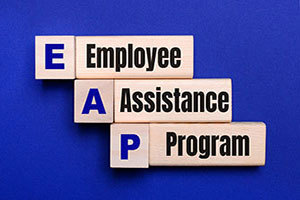 Employee Assistance Programs (EAPs) are nothing new. In fact, 97 percent of large employers offer an EAP as part of their benefits package. Yet, the utilization rate of these programs is abysmally low, clocking in at an average of less than 5 percent even as concerns around mental health continue to grow. EAPs should be a key resource for struggling employees, so why isn’t anybody using them? Read how HR can help remove barriers to access and improve EAP usage.