
by CUPA-HR
CUPA-HR General Counsel Ira Shepard highlights the U.S. Court of Appeals considering reinstatement for fired transgender professor after favorable Supreme Court decision protecting LGBT workers from discrimination, the EEOC collecting a record amount in monetary damages for charging-party employees while number of actual litigated cases drops, a surge in national-security-related enforcement actions filed by the U.S. Department of Justice against professors at U.S. universities who have ties with China, and more.



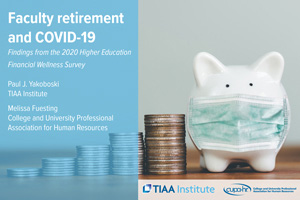 Even before the pandemic, faculty retirement patterns have been top of mind for colleges and universities for planning for the future. According to the 2020 Higher Education Wellness Survey conducted by TIAA Institute and CUPA-HR, the economic consequences of COVID-19 have altered the expected retirement age for more than one-third of full-time faculty age 50 or older. Although this trend can be concerning for institutions, encouraging faculty to use phased retirement programs can help ease the transition, as can encouraging them to seek financial advice on planning and saving for retirement from a professional advisor.
  For HR, most of 2020 was spent adapting to the new world of work all while taking on hefty workloads to ensure our institutions continued to run smoothly during the pandemic. This constant cycle of challenging work pushed our mental health to its limits. As we step into a new year, let’s take time to step back from the habits we may have developed in 2020 that were not beneficial to our mental health and well-being. Here, we’ve curated a list of resources that nudge higher ed HR professionals to take stock of their own mental health and well-being so that they can continue to support those they serve at their institutions.
  On January 12, 2021, the U.S. Department of Labor announced a final rule which will raise government prevailing wage minimums for foreign professional workers under the H-1B and other visa programs. The rule revises a previously released Interim Final Rule that took effect on October 8, 2020 but was subsequently struck down by three federal district courts. While the rule is scheduled to take effect 60 days after it is published in the Federal Register, President-Elect Biden has promised to issue a memo on his first day in office that will halt or pause for at least 60 days any Trump administration regulations that have not taken effect by inauguration.
  Cornerstone OnDemand, a CUPA-HR Mary Ann Wersch Premier Partner, shares why great leadership is critical in higher education and some tips on how you can build, develop and grow the impactful leaders within the ranks of your faculty and staff. They also share a case study from Davenport University to illustrate a few key leadership development techniques that you can put into action today and useful advice on how to empower your current leaders, keep staff motivated and engaged, and inspire the next generation of leadership — all at the same time.