


Exploring the Presidential Pipeline in CUPA-HR Administrators in Higher Education Annual Report

As colleges and universities strive to create a more equitable and representative workforce, there has been increased emphasis on recognizing and exploring the pipeline that leads to leadership positions. The 2020 CUPA-HR Administrators in Higher Education Annual Report highlights data collected on the pipeline for three key positions: institution president/CEO, provost/chief academic officer and chief human resources officer.
 While the full impact of the COVID-19 pandemic is still unknown, it is almost certain that most higher education institutions will be confronted with the challenges of lower student enrollment and, with the resulting decrease in tuition revenue, reduced operating budgets. Many HR departments will soon be asked to strategically reduce the size of the workforce while retaining critical operational functions. Higher ed HR can use existing CUPA-HR data to inform workforce decisions in the weeks and months ahead.
  CUPA-HR’s Wes Harmon, senior manager of learning and professional development at CUPA-HR, catches up with Janet May, chief human resources officer at Houston Community College. Janet shares ways that HCC has promoted well-being among faculty and staff by keeping the lines of communication open and consistently promoting flexibility, kindness, consideration and compassion.
  As the COVID-19 public health emergency continues, policymakers are providing new financial assistance to workers impacted by the outbreak. One form of assistance is additional unemployment compensation for both previously eligible individuals and new classes of workers. Questions remain, however, about which workers qualify to receive such benefits, including whether students who perform work for their school, college or university can receive unemployment compensation.
  Even as HR leaders across the country are helping their institutions navigate telework arrangements, paid leave and other COVID-19 challenges, they are looking ahead to what’s next. How will enrollment numbers and institutional budget be affected in the coming months, and what will the impact of those changes be on workforce planning? Never has data been more important, and as collectors of workforce data, HR is uniquely positioned to analyze and organize that information. One way to share information in a clear and meaningful way is to create data visualizations that resonate with campus leaders.
  CUPA-HR President and CEO Andy Brantley catches up with Susan Norton, vice president for human resources at Augusta University in Georgia. Susan shares how Augusta’s definition of essential vs. reserved employees has evolved, and how the university is working to clarify leave and telework options for employees with a quick-reference chart and more.
 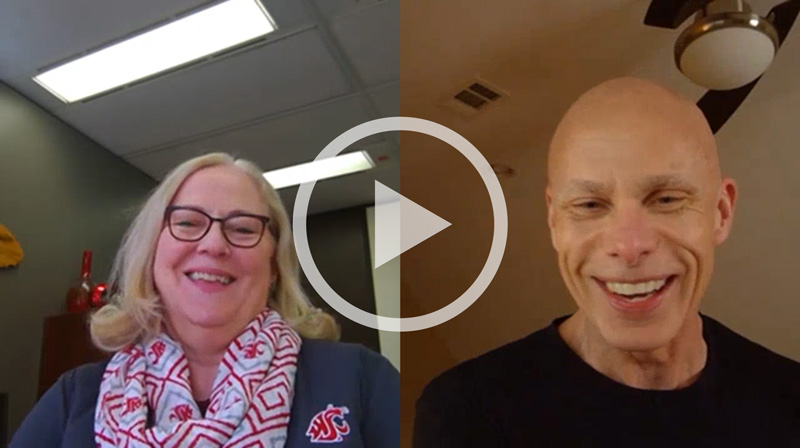 CUPA-HR President and CEO Andy Brantley catches up with Theresa Elliot-Cheslek, vice president and chief human resource officer at Washington State University. WSU was one of the first institutions to move large numbers of employees to remote work arrangements in response to the COVID-19 crisis, and Theresa shares how they’re making it work!