
by CUPA-HR

CUPA-HR General Counsel Ira Shepard’s overview this month includes a fired professor’s retaliation claim against the New Jersey Institute of Technology, after a New York Times article exposed his “alt-right” views, which included praising Hitler. It also highlights the potential collision between the NLRA and FERPA, a delay in the proposed $2.8 billion settlement of the NCAA’s antitrust case, and the latest on the strike of graduate student workers at Boston University, which has become the longest union-backed, student employee strike of the last decade.



 On October 17, the Department of Labor’s Office of the Solicitor issued a Special Enforcement Report on “coercive contractual provisions.” The report lists several provisions they have seen included in employment contracts that the department believes “may discourage workers from exercising their rights under worker protection laws.” The report demonstrates recent actions taken to combat such provisions, but it does not include new enforcement actions against employers that use these provisions.
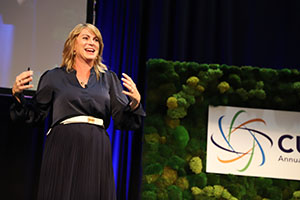 At the CUPA-HR Annual Conference and Expo 2024, the three keynote sessions offered insights on how higher ed can articulate its value proposition for employees. How can HR, campus leaders and other culture architects ensure their institutions are places where candidates want to work and where employees want to stay? And how can we bridge the cultural, political and intergenerational divides so many of us are experiencing on campus to help our communities thrive? There isn’t a one-size-fits-all solution to these challenges, but the keynote speakers reminded higher ed HR pros not to underestimate the value of a shared purpose. Here are a few of their insights into remaking workplace culture through deliberate community-building, connecting through traditions and reinforcing our collective values.
  Like many HR professionals, Colorado Community College System’s Jennifer Parker was grappling with an increase in incivility on campus. She set about creating a civility training program that would be convenient and interactive. However, she faced a considerable hurdle: the challenges of creating a virtual training program from scratch, solo. Parker’s creative answer to one of these challenges — writing scripts for her under-10-minute videos — was to put ChatGPT to work for her.
  The Public Service Loan Forgiveness (PSLF) program can offer significant financial relief to higher ed employees, but many don’t know they qualify for this benefit. PSLF is open to most full-time higher ed employees of nonprofit colleges and universities who have direct federal student loans. Here’s what you need to know about who qualifies for PSLF, how to offer a free webinar on PSLF to your employees, and what steps you can take to ensure eligible employees enroll.
  Social bonds are as necessary to our well-being as a healthy diet, exercise and sleep, according to the Surgeon General’s 2023 report on the loneliness epidemic. The report recommends that workplaces make decreasing loneliness a strategic priority at all levels. The second part of this blog series explores how higher ed HR can help prioritize social connection as a vital tool in supporting employee happiness and well-being.
  Loneliness can be as bad for you as smoking 15 cigarettes a day, according to a Surgeon General’s report from last year. The report identifies loneliness as a national epidemic experienced by about one in two adults. Loneliness is “associated with a greater risk of cardiovascular disease, dementia, stroke, depression, anxiety, and premature death.” That means human connection is as necessary for your long-term survival as food and water. We explore what HR needs to know about chronic loneliness and how workplaces can help combat it in the first of a two-part blog series.